Tailoring product choices to match crop challenges at T3!

Recent rainfall and warmer temperatures have increased late-season disease pressure in many cereal crops. Brown rust, Fusarium and late Septoria Infections remain the three key concerns at T3 heading into flowering and grain fill. Identifying which disease risks are most relevant to your crop is essential for cost-effective disease management and extending green leaf retention,... Read more

T2. Protecting yield throughout seasonal change.

T2 Key Considerations Growers will need to be well prepared for all situations to protect crops adequately by assessing crops carefully. NIAB trials work indicates 67% of fungicide response is delivered at the T2 timing (GS 37 – 39). The flag leaf contributes to 40-45% of yield alone, so keeping both leaf 2 and the... Read more

T0: The Ideal Starting Point for Disease Control in Cereals

Strong crop establishment last autumn and a mild winter mean many cereal crops may require early protection this season. ๐—ž๐—ฒ๐˜† ๐—–๐—ผ๐—ป๐˜€๐—ถ๐—ฑ๐—ฒ๐—ฟ๐—ฎ๐˜๐—ถ๐—ผ๐—ป๐˜€ ๐—ณ๐—ผ๐—ฟ ๐—ง๐Ÿฌ Early protection is crucial for safeguarding yield potential, especially in crops more vulnerable to Yellow rust. Secondary protection against Septoria is advisable where risk is elevated. Early rust control at T0 has... Read more

T0 - The Ideal Starting Point for Disease Control in Cereals    

OSR Stem Extension โ€“ Light Leaf Spot Focus!

With many Oilseed Rape crops developing rapidly after favourable autumn conditions, planning stem extension fungicide applications could be vital this spring. Early spring is a key timing to assess Light Leaf Spot (LLS) risk, particularly in forward crops, to help protect yield and manage canopy structure. As crops reach mid-calf height, LLS risk increases, highlighting... Read more

OSR Stem Extension - Technical Bulletin - 2026    

Early Summer Outlook: Crop Stress Rising!

In the Early Summer Outlook: Dry soil stress continues, especially in the east, cereals and maize are struggling and may be harvested earlier if conditions stay hot and dry. Several regions have received more frequent rainfall events, especially in the west, creating more favourable conditions for late blight in potatoes. Late-season sprays still key, with... Read more

T3. Tailor product choice to match your crop challenges.

There are essentially three main disease challenges in cereals at the T3 timing. Understanding which of these are relevant to your crop will be key to cost effective disease management and extending green leaf retention. Brown Rust Brown rust is typically associated with warm conditions at this time of year and current weather conditions are... Read more

T3. Tailor product choice to match your crop challenges.    

T1. Disease Control Planning.

T1 timing is key for delivering effective disease control in cereals for the season ahead. It’s been a difficult season so far with a mild wet winter and only a brief cold snap in January. Field conditions vary widely across soil types and fields, but in general crops are starting to look greener after a... Read more

T1. Disease Control Planning.    
Explore our latest Technical Bulletin: T0. Disease Control Starting Point.

T0 is the perfect time to set up season-long control of key diseases in wheat and barley. This spring, growers face a diverse range of crop situations, unlike last season, with increased variability in cropping due to later drilling and very wet autumn/winter field conditions. Where yield potential is already limited, growers should consider using... Read more

T0. Disease Control Starting Point - Clayton Cereal Fungicides    

Winter Oilseed Rape…disease control and plant growth regulation.

Warmer temperatures earlier in October and higher rainfall this autumn have led to high Phoma pressure. Crops that were drilled very early may be less susceptible, but Light leaf spot (LLS) pressure will be higher, so disease control measures may be needed for both diseases. Keep an eye on the size of these crops too... Read more

Winter Oilseed Rape...disease control and plant growth regulation.    

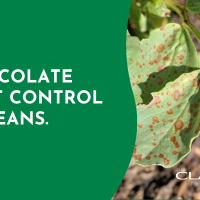
Chocolate spot control in beans. Options for early control.

Following the warm autumn, relatively mild winter and wet early spring conditions, levels of Chocolate spot being observed in-field are high and building. Early control will be key to managing this and it is inadvisable to wait until early flowering before making an intervention. Benzovindiflupyr products now offer an excellent option for managing this disease... Read more

Chocolate spot control in beans 2023    

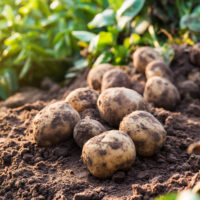
2023 Potato Variety Lists for Clayton Mizen and Clayton Mizuna!

Full details of approved varieties for both main crop potatoes (pre-emergence only and pre- and post-emergence treatments) and first and second earlies (pre-emergence treatment only) for both our herbicides Clayton Mizen and Clayton Mizuna containing metribuzin can be found here…ย 

Clayton Mizen Variety List 2023     Clayton Mizuna Variety List 2023    

T3 timing and product choice critical for effective disease protection!

Early ear emergence, rapid movement of foliar diseases up the plant and current grain prices all mean that an effective T3 application is crucial. Product choice should not only be focused on controlling the quality and yield losses from fusarium but also foliar disease top up which will depend on variety and previous fungicide applications.ย ... Read more

T3 timing and product choice critical for effective disease protection!    

Autumn weed controlย in later-sown winter cereals!

Clayton Plant Protection offers a wide range of leading herbicides for cereal crops this autumn. Achieving good crop establishment to maximise yields relies on effective, early-season control of grass and broad-leaved weeds. Careful planning in terms of product choice and the effective stacking of residual herbicides for pre-and post-emergence weed control will help growers achieve... Read more

Cereal Herbicides Product Guide - 2021